


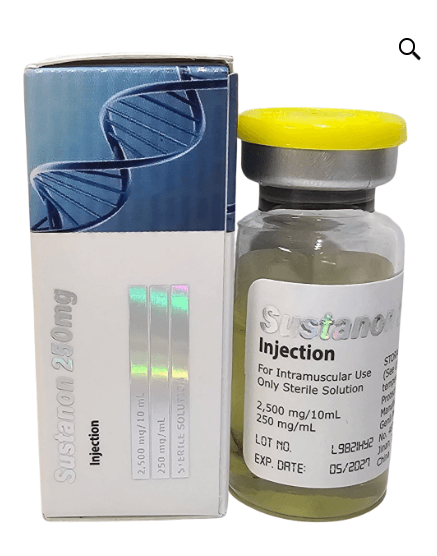
SUSTANON 250 Genli Pharmaceuticals – 10 mL Best USA
SUSTANON 250 Genli Pharmaceuticals (250 mg/mL, 10 mL) is a multi-ester testosterone formulation discussed in clinical contexts for its overlapping release profile. While its ester composition affects pharmacokinetics, TRT eligibility remains diagnosis-driven and requires confirmed testosterone deficiency, symptom correlation, and medical supervision.
SUSTANON 250 Genli Pharmaceuticals Introduction
SUSTANON 250 Genli Pharmaceuticals – 10 mL represents a multi-ester testosterone formulation designed within a long-established pharmacological concept: combining testosterone esters with different release characteristics into a single injectable preparation. Unlike single-ester testosterone products, Sustanon-type formulations are structured to provide overlapping testosterone release phases, driven by the physicochemical properties of each ester component.
This article provides an advanced educational and clinical analysis of Sustanon 250 from a pharmacological standpoint, focusing specifically on its ester composition, release dynamics, endocrine implications, and clinical context within testosterone-related discussions. Within this framework, Genli Pharmaceuticals Sustanon 250 is referenced as a formulation example emphasizing stated ester composition and concentration integrity, without implying medical recommendation or therapeutic instruction.
What Is Sustanon 250 Genli Pharma? A Multi-Ester Testosterone Concept
Sustanon 250 is a compound testosterone formulation composed of four distinct testosterone esters, each contributing to a layered release profile:
-
Testosterone Propionate – 30 mg
-
Testosterone Phenylpropionate – 60 mg
-
Testosterone Isocaproate – 60 mg
-
Testosterone Decanoate – 100 mg
Each ester is chemically identical at the testosterone core level; the difference lies in the ester chain length and lipophilicity, which determines how quickly testosterone becomes bioavailable after administration.
The defining characteristic of Sustanon 250 is temporal dispersion, not increased androgenic potency.
Ester Architecture and Pharmacological Rationale
Why Combine Multiple Testosterone Esters?
Testosterone esters differ primarily in:
-
Lipid solubility
-
Rate of ester cleavage
-
Duration of testosterone release
By combining short-, medium-, and long-chain esters, Sustanon formulations are engineered to:
-
Reduce extreme peaks and troughs
-
Provide sustained androgen exposure
-
Maintain overlapping testosterone availability
This multi-ester architecture is fundamentally different from single-ester products such as testosterone cypionate or enanthate, where release kinetics depend on one ester alone.
Sustanon 250 Genli Detailed Ester Breakdown (Clinical Perspective)
Testosterone Propionate (30 mg)
Testosterone propionate is a short-chain ester with relatively rapid ester cleavage.
Key characteristics:
-
Fast initial testosterone release
-
Early contribution to circulating testosterone levels
-
Short duration compared to other esters in the blend
In Sustanon 250, propionate serves as the early-phase component, contributing to the initial androgen presence.
Testosterone Phenylpropionate (60 mg)
Phenylpropionate occupies a transitional role between short- and medium-chain esters.
Key characteristics:
-
Moderately rapid release
-
Longer activity than propionate
-
Provides continuity after the early phase
This ester helps bridge the gap between immediate and sustained testosterone availability.
Testosterone Isocaproate (60 mg)
Isocaproate is a medium-chain ester with balanced release kinetics.
Key characteristics:
-
Gradual testosterone liberation
-
More stable mid-phase androgen exposure
-
Less fluctuation than shorter esters
Within Sustanon 250, isocaproate supports mid-term hormonal stability.
Testosterone Decanoate (100 mg)
Decanoate is the longest-chain ester in the formulation and the largest quantitative component.
Key characteristics:
-
High lipophilicity
-
Slow ester cleavage
-
Prolonged testosterone release
Decanoate anchors the formulation’s long-duration phase, extending testosterone availability well beyond the initial esters.
Integrated Release Dynamics: How Sustanon Genli Differs Conceptually
Rather than acting as four independent compounds, Sustanon’s esters function as an integrated release system:
-
Short esters initiate testosterone presence
-
Medium esters sustain mid-phase exposure
-
Long ester extends overall duration
The result is a layered pharmacokinetic profile, where testosterone levels are supported through overlapping ester activity rather than reliance on a single release curve.
This complexity is central to Sustanon’s long-standing clinical and pharmacological discussion.
Endocrine Implications of Multi-Ester Testosterone
From an endocrine standpoint, all exogenous testosterone—regardless of ester—interacts with the hypothalamic–pituitary–gonadal (HPG) axis through negative feedback mechanisms.
Key considerations include:
-
Suppression of endogenous testosterone production
-
Reduction in LH and FSH secretion
-
Potential impact on spermatogenesis
The ester composition influences timing, not mechanism. Once ester cleavage occurs, free testosterone behaves identically at the receptor level.
SUSTANON 250 Genli Pharmaceuticals: Product Context
SUSTANON 250 Genli Pharmaceuticals – 10 mL is positioned as a formulation emphasizing:
-
Clear ester delineation
-
Transparent milligram allocation per ester
-
Consistency with established Sustanon architecture
In markets where multi-ester formulations may vary in execution, clarity around ester identity and stated concentration becomes clinically and analytically relevant.
This product reference serves an informational and comparative role only, illustrating formulation structure rather than advocating therapeutic use.
Multi-Ester Testosterone, TRT, and Clinical Evaluation: The Context of Sustanon 250 Genli Pharmaceuticals
In clinical endocrinology, multi-ester testosterone formulations such as Sustanon 250 by Genli Pharmaceuticals are discussed within a highly structured medical framework that prioritizes diagnosis, physiological restoration, and long-term risk management over formulation novelty.
Although Sustanon-type products differ from single-ester testosterone formulations in their ester composition and release kinetics, they remain pharmacologically classified as exogenous testosterone. As such, they are governed by the same medical principles that define Testosterone Replacement Therapy (TRT) regardless of manufacturer, including Genli Pharma.
How Multi-Ester Testosterone Fits Into TRT Discussions
In the medical literature, Sustanon-type formulations are referenced primarily in relation to their multi-phase pharmacokinetic profile, which results from the combination of short-, medium-, and long-chain testosterone esters.
For Sustanon 250 Genli Pharmaceuticals, this includes:
-
Testosterone Propionate (rapid onset)
-
Testosterone Phenylpropionate (short–intermediate duration)
-
Testosterone Isocaproate (intermediate duration)
-
Testosterone Decanoate (long duration)
From a clinical perspective, this ester blend is designed to create overlapping testosterone release curves, theoretically smoothing fluctuations in serum testosterone over time. However, it is critical to emphasize that this pharmacokinetic design does not redefine TRT itself.
TRT Is Diagnosis-Driven, Not Formulation-Driven
One of the most consistent principles across international clinical guidelines is that TRT candidacy must be established independently of the testosterone formulation under consideration.
Whether discussing:
-
Sustanon 250 Genli Pharmaceuticals
-
Testosterone cypionate
-
Testosterone enanthate
The diagnostic threshold for TRT remains unchanged.
Core Diagnostic Criteria for TRT Consideration
Medical evaluation for TRT typically includes:
-
Biochemical Confirmation
-
Repeated morning total testosterone measurements
-
Assessment of free testosterone when indicated
-
Consideration of SHBG levels
-
-
Symptom Correlation
-
Sexual symptoms (libido, erectile changes)
-
Energy and fatigue
-
Mood and cognitive symptoms
-
Loss of muscle mass or bone density (when clinically relevant)
-
-
Etiological Assessment
-
Primary vs secondary hypogonadism
-
Evaluation of pituitary, testicular, or systemic contributors
-
Review of medications, sleep disorders, obesity, and chronic illness
-
-
Baseline Risk Stratification
-
Hematocrit and hemoglobin
-
Lipid profile
-
Estradiol
-
Prostate-specific antigen (PSA) when age-appropriate
-
Cardiovascular and metabolic risk factors
-
No aspect of the multi-ester design of Sustanon 250 Genli Pharma alters these diagnostic requirements.
Endocrine Physiology Remains Identical Across All Testosterone Formulations
From an endocrine standpoint, once the ester chains are cleaved and free testosterone enters systemic circulation, the body does not differentiate between testosterone derived from:
-
Single-ester formulations
-
Multi-ester formulations
-
Different manufacturers, including Genli Pharmaceuticals
All exogenous testosterone:
-
Activates androgen receptors
-
Suppresses the hypothalamic–pituitary–gonadal (HPG) axis
-
Reduces endogenous testosterone synthesis
-
Impacts spermatogenesis through LH and FSH suppression
Thus, while Sustanon 250 Genli Pharmaceuticals may alter timing of testosterone availability, it does not modify endocrine feedback mechanisms or long-term physiological consequences.
Clinical Monitoring Parameters in TRT: Sustanon Is Not an Exception
Despite its multi-ester composition, Sustanon does not reduce or simplify TRT monitoring requirements. In fact, some clinicians note that multi-ester formulations may introduce greater variability in serum testosterone patterns, reinforcing the importance of careful interpretation.
Routine monitoring in TRT discussions includes:
-
Total and free testosterone (timing-dependent)
-
Hematocrit and hemoglobin trends
-
Estradiol levels and aromatization balance
-
Lipid profile changes
-
Blood pressure and fluid balance
-
PSA and prostate evaluation when indicated
For products such as Sustanon 250 by Genli Pharmaceuticals, formulation accuracy and batch consistency become especially relevant, as inconsistent concentrations can further complicate laboratory interpretation in already variable pharmacokinetic profiles.
TRT Duration and Long-Term Considerations
TRT is rarely conceptualized as a short-term intervention. In many cases, testosterone deficiency reflects persistent or progressive underlying conditions, including:
-
Primary testicular failure
-
Pituitary dysfunction
-
Age-related hypogonadism (context-dependent)
Therefore, TRT is often approached as:
-
Long-term therapy with periodic reassessment
-
A continuous risk–benefit evaluation
-
A medically supervised intervention requiring ongoing follow-up
The use of Sustanon 250 Genli Pharma does not change these temporal considerations. Ester complexity does not shorten, lengthen, or redefine TRT duration.
Genli Pharmaceuticals and Formulation Integrity in TRT Discussions
In a market characterized by variability in testosterone manufacturing, references to Genli Pharmaceuticals often arise in discussions centered on:
-
Stated concentration accuracy
-
Ester ratio consistency
-
Manufacturing transparency
-
Batch reliability
While these factors are not determinants of TRT eligibility, they play a role in clinical confidence and interpretive clarity, particularly when monitoring long-term hormonal trends.
Accurate formulations support:
-
More reliable laboratory correlations
-
Reduced uncertainty in symptom interpretation
-
Improved consistency in long-term monitoring
Key Clinical Distinction
It is essential to distinguish between:
-
Pharmacokinetic design (single vs multi-ester)
-
Clinical indication (TRT eligibility)
Sustanon 250 Genli Pharmaceuticals represents a specific delivery architecture within an unchanged medical paradigm. It does not bypass diagnostic rigor, alter endocrine physiology, or reduce the need for medical oversight.
Potential Side Effect Considerations (Conceptual Overview)
Because Sustanon 250 delivers testosterone via multiple esters, side effects reflect systemic testosterone exposure, not ester identity.
Commonly discussed physiological considerations include:
-
Hematocrit elevation
-
Estradiol conversion
-
Lipid profile modulation
-
Fertility suppression
-
Cardiovascular risk modulation
The presence of multiple esters does not eliminate these risks; it only modifies temporal exposure patterns.
Why Ester Transparency Matters
Understanding Sustanon’s ester composition is essential for:
-
Interpreting laboratory trends
-
Evaluating hormonal fluctuations
-
Comparing formulations across manufacturers
Genli Pharmaceuticals Sustanon 250 highlights the importance of accurate ester representation in an environment where multi-ester products may differ despite identical labeling.
Sustanon Versus Single-Ester Testosterone: Conceptual Contrast
| Aspect | Sustanon 250 | Single-Ester Testosterone |
|---|---|---|
| Ester composition | Four esters | One ester |
| Release profile | Layered | Singular |
| Pharmacokinetics | Overlapping phases | Single curve |
| Mechanism of action | Identical testosterone | Identical testosterone |
The distinction lies in delivery design, not hormonal identity.
SUSTANON 250 Genli Pharmaceuticals – Frequently Asked Questions (FAQ)
What is SUSTANON 250 Genli Pharmaceuticals?
SUSTANON 250 Genli Pharmaceuticals (250 mg/mL, 10 mL) is a multi-ester testosterone formulation composed of four different testosterone esters designed to provide staggered testosterone release. It is discussed in educational and clinical contexts for its pharmacokinetic structure rather than for altering the biological action of testosterone itself.
How does SUSTANON 250 Genli Pharmaceuticals differ from single-ester testosterone products?
The primary difference lies in ester composition, not in testosterone’s biological function. SUSTANON 250 Genli Pharmaceuticals combines short-, medium-, and long-chain esters, resulting in overlapping release phases. Single-ester products rely on one ester with a more uniform release curve. Neither approach changes testosterone’s endocrine effects once free testosterone is available systemically.
Does the multi-ester design of SUSTANON 250 Genli Pharmaceuticals change TRT eligibility?
No. Testosterone Replacement Therapy (TRT) eligibility is diagnosis-driven, not formulation-driven. Whether a patient is evaluated in the context of SUSTANON 250 Genli Pharmaceuticals or any other testosterone formulation, TRT consideration requires confirmed biochemical testosterone deficiency, symptom correlation, and comprehensive medical evaluation.
Is SUSTANON 250 Genli Pharmaceuticals used in TRT discussions?
Yes. Sustanon-type formulations are frequently referenced in TRT-related discussions due to their unique pharmacokinetic profiles. However, their inclusion in TRT literature does not imply superiority or different medical indications compared to other testosterone esters.
Does SUSTANON 250 Genli Pharmaceuticals affect the HPG axis differently?
No. Once ester chains are cleaved and free testosterone enters circulation, all exogenous testosterone formulations—including SUSTANON 250 Genli Pharmaceuticals—interact with the hypothalamic–pituitary–gonadal (HPG) axis in the same way. This includes suppression of endogenous testosterone production and gonadotropin secretion.
Does SUSTANON 250 Genli Pharmaceuticals preserve fertility?
No. Like all forms of exogenous testosterone, SUSTANON 250 Genli Pharmaceuticals can suppress spermatogenesis by reducing intratesticular testosterone levels. TRT is not considered fertility-preserving, and fertility considerations are a critical part of medical evaluation before initiating any testosterone therapy.
Why is formulation accuracy important for SUSTANON 250 Genli Pharmaceuticals?
Formulation accuracy is particularly important in multi-ester products because inconsistent ester ratios or concentrations can complicate laboratory interpretation and clinical monitoring. References to Genli Pharmaceuticals often arise in discussions about stated concentration accuracy and batch consistency in a market where variability is common.
Does SUSTANON 250 Genli Pharmaceuticals raise testosterone to supraphysiologic levels?
No. Within a clinical framework, the goal of TRT is to restore testosterone levels to physiological ranges, not to exceed them. Supraphysiologic testosterone levels increase the risk of adverse effects and fall outside the therapeutic intent of TRT, regardless of formulation.
Is TRT considered a lifestyle choice when discussing SUSTANON 250 Genli Pharmaceuticals?
No. TRT is a medical intervention, not a lifestyle decision. It requires objective laboratory evidence, clinical correlation, and ongoing medical supervision. Framing TRT as a lifestyle choice misrepresents its medical complexity and risk profile.
Can SUSTANON 250 Genli Pharmaceuticals be discussed without promoting TRT?
Yes. SUSTANON 250 Genli Pharmaceuticals can be discussed from a pharmacological, biochemical, and formulation-quality perspective without implying medical recommendation or treatment guidance. Educational discussions often focus on ester composition, release characteristics, and clinical monitoring considerations.
Medical Disclaimer
This content is provided for educational and informational purposes only. It does not constitute medical advice, diagnosis, or treatment recommendations. Decisions regarding Testosterone Replacement Therapy must be made by qualified healthcare professionals based on individual clinical evaluation and laboratory testing. Products mentioned are referenced solely for informational and comparative purposes.
Author Profile
Dr. Michael A. Reynolds, MD, FACE
Board-Certified Endocrinologist | Androgen & Metabolic Health Specialist (USA)
About the Author
Dr. Michael A. Reynolds is a U.S.-based, board-certified endocrinologist with over 15 years of clinical and academic experience specializing in male hypogonadism, testosterone physiology, and hormone replacement therapy (TRT). His work focuses on the evidence-based evaluation of testosterone deficiency, the pharmacology of injectable testosterone formulations, and the long-term risk assessment of androgen therapy.
Dr. Reynolds is widely recognized for his expertise in interpreting complex hormonal profiles, including total and free testosterone, SHBG dynamics, estradiol balance, hematological markers, and cardiometabolic risk parameters. His clinical approach emphasizes diagnosis-driven decision-making, physiological hormone restoration, and patient safety, particularly in discussions involving long-acting testosterone esters such as testosterone cypionate, enanthate, and multi-ester formulations like Sustanon 250.
Medical Training & Credentials
-
Doctor of Medicine (MD), Johns Hopkins University School of Medicine
-
Residency in Internal Medicine, Massachusetts General Hospital
-
Fellowship in Endocrinology, Diabetes, and Metabolism, Mayo Clinic
-
Board Certified in Endocrinology, Diabetes & Metabolism
-
Fellow of the American College of Endocrinology (FACE)
Clinical & Research Focus
Dr. Reynolds’ professional focus includes:
-
Clinical evaluation of testosterone deficiency and male hypogonadism
-
Testosterone Replacement Therapy (TRT) risk–benefit assessment
-
Pharmacokinetics of single-ester and multi-ester testosterone formulations
-
Interpretation of physiological vs supraphysiological testosterone levels
-
Long-term monitoring of hematocrit, cardiovascular risk, lipid metabolism, and prostate health
-
Endocrine feedback mechanisms involving the HPG axis
He has contributed to clinical reviews and educational content informed by guidelines from the Endocrine Society, American Urological Association (AUA), and peer-reviewed endocrinology journals.
Professional Experience
-
Attending Endocrinologist, Academic Medical Center (USA)
-
Consultant for hormone health and metabolic medicine programs
-
Contributor to physician education initiatives on TRT safety and monitoring
-
Reviewer of peer-reviewed literature from:
-
The Journal of Clinical Endocrinology & Metabolism
-
Endocrine Reviews
-
The New England Journal of Medicine
-