


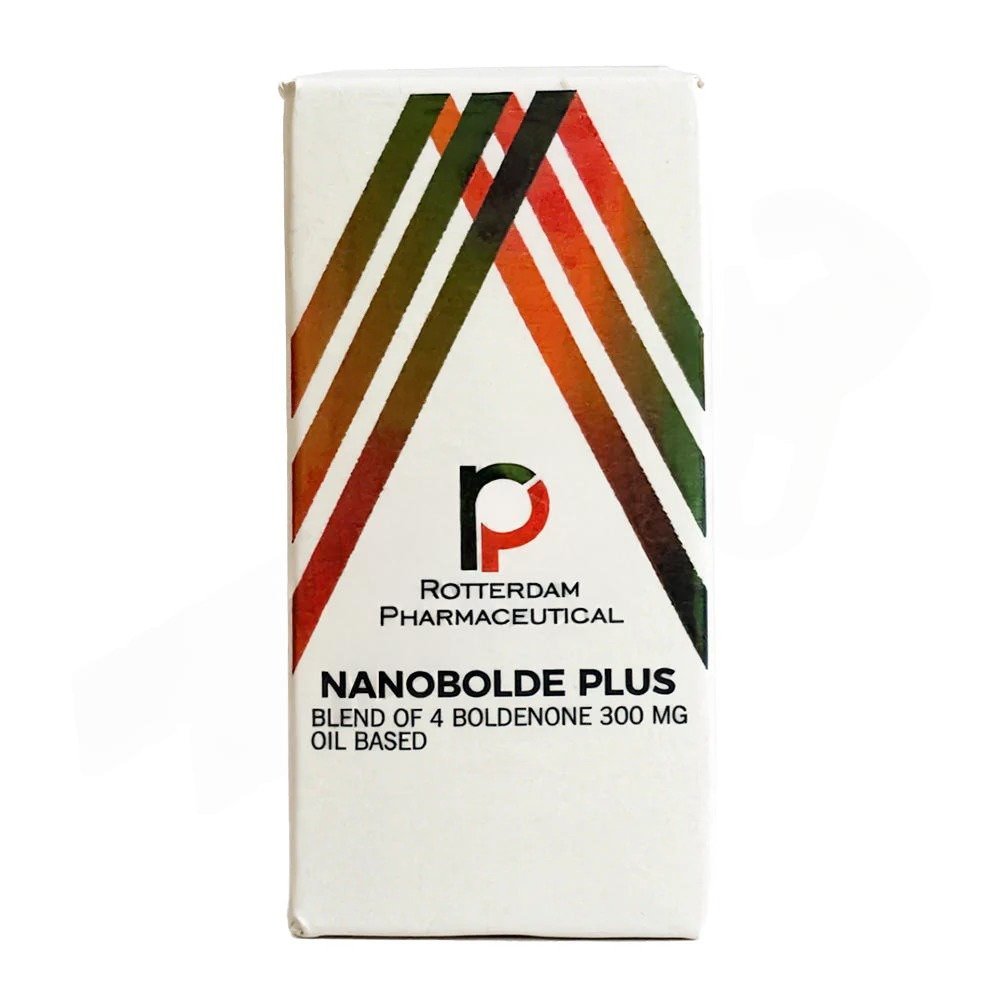
Boldenone 300 Rotterdam 10ml Best USA
Boldenone 300 Rotterdam is a high-potency injectable anabolic steroid delivering a total of 300 mg of boldenone per milliliter, formulated with a unique blend of four esters: acetate (40 mg), propionate (80 mg), cyclopentylpropionate (80 mg), and undecylenate (100 mg). This multi-ester design allows for both rapid onset and long-lasting activity, offering a more balanced and sustained release profile compared to single-ester formulations.
Boldenone 300 Rotterdam: Advanced Four-Ester Boldenone Formulation Explained
Boldenone 300 Rotterdam is a high-concentration injectable boldenone formulation built around a four-ester delivery system, specifically engineered to optimize release kinetics, plasma stability, and long-term hormonal consistency. With a total concentration of 300 mg per milliliter, this formulation combines short-, medium-, and long-acting esters to create a layered pharmacokinetic profile that differs substantially from traditional single-ester boldenone products.
Rather than relying exclusively on boldenone undecylenate, Boldenone 300 Rotterdam integrates acetate, propionate, cyclopentylpropionate (cypionate), and undecylenate in a single solution. This multi-ester architecture is designed to provide earlier functional onset, smoother hormonal curves, and prolonged systemic activity without excessive peaks or abrupt declines.
From a technical standpoint, Boldenone 300 Rotterdam represents a formulation philosophy rooted in underground pharmaceutical engineering, where ester stacking is used to refine hormone delivery beyond what is available in conventional pharmaceutical products.
What Is Boldenone 300 Rotterdam?
Boldenone 300 Rotterdam is an oil-based injectable compound delivering 300 mg of total boldenone per milliliter, distributed across four distinct esters:
-
Boldenone Acetate – 40 mg
-
Boldenone Propionate – 80 mg
-
Boldenone Cyclopentylpropionate (Cypionate) – 80 mg
-
Boldenone Undecylenate – 100 mg
Each ester is chemically bonded to the boldenone base molecule, altering its lipophilicity, enzymatic cleavage rate, and release timeline once injected intramuscularly. After administration, ester bonds are hydrolyzed by esterases, gradually freeing active boldenone into circulation.
This design allows the formulation to behave as a controlled-release androgen system, rather than a single peak-and-decline curve.
Pharmacological Properties of Each Boldenone Ester

Pharmacological Properties of Each Boldenone Ester
Boldenone Acetate (40 mg)
Boldenone acetate is a short-chain ester, characterized by rapid hydrolysis following intramuscular injection.
Pharmacological profile:
-
Fast ester cleavage
-
Short effective half-life
-
Rapid increase in serum boldenone levels
Functional role in the blend:
The acetate component initiates early androgen activity, helping reduce the delayed onset commonly associated with long-chain esters. Its inclusion allows the formulation to begin exerting measurable effects within days rather than weeks.
Boldenone Propionate (80 mg)
Boldenone propionate occupies the short-to-medium ester range, offering a balance between speed and stability.
Pharmacological profile:
-
Moderately fast absorption
-
Predictable release curve
-
Reduced volatility compared to acetate
Functional role in the blend:
Propionate acts as a transitional ester, sustaining hormone availability after the acetate phase while smoothing early plasma fluctuations.
Boldenone Cyclopentylpropionate / Cypionate (80 mg)
This ester introduces a medium-chain dynamic, often associated with steadier blood levels and reduced injection pressure.
Pharmacological profile:
-
Longer ester chain
-
Slower enzymatic hydrolysis
-
Extended duration of action
Functional role in the blend:
Cyclopentylpropionate serves as the structural backbone of the formulation, maintaining mid-cycle hormonal consistency and acting as a buffer between short and long esters.
Boldenone Undecylenate (100 mg)
Boldenone undecylenate is the long-chain ester historically associated with boldenone use.
Pharmacological profile:
-
High lipophilicity
-
Slow release from depot
-
Prolonged systemic presence
Functional role in the blend:
Undecylenate ensures long-term hormonal support, maintaining baseline androgen levels and extending activity well beyond the initial phases of the cycle.
Advantages of a Four-Ester Boldenone System
The defining feature of Boldenone 300 Rotterdam is not just its concentration, but its multi-ester design philosophy.
Layered Release Kinetics
By combining esters with different half-lives, boldenone is released in overlapping waves, producing smoother plasma curves.
Reduced Hormonal Volatility
Multi-ester stacking minimizes abrupt peaks and troughs, contributing to more stable androgen exposure.
Faster Functional Onset
Short esters reduce the waiting period typical of undecylenate-only formulations.
Sustained Long-Term Activity
Long esters extend effectiveness without excessive injection frequency.
Improved User Predictability
From a pharmacokinetic perspective, the formulation behaves more like a controlled-release hormone system than a traditional single-ester steroid.
Origin of Boldenone 300 Rotterdam
Boldenone 300 Rotterdam is best understood as a 100% underground laboratory formulation. There is no pharmaceutical manufacturer that produces a four-ester boldenone product, nor is such a compound approved for medical use in humans.
The origin of this formulation likely stems from:
-
Underground chemists identifying limitations of boldenone undecylenate
-
Demand for faster onset without sacrificing long-term stability
-
Advances in solvent systems and ester solubility management
Multi-ester concepts have historically been used in testosterone blends, and this same logic appears to have been adapted to boldenone. The Rotterdam designation is typically associated with underground branding rather than geographic pharmaceutical origin.
Benefits of Boldenone 300 Rotterdam in Bodybuilding
From a bodybuilding perspective, boldenone is often valued for its moderate anabolic profile and relatively balanced androgenic properties.
Potential benefits often associated with boldenone-based formulations include:
-
Support for lean muscle mass accumulation
-
Enhanced nitrogen retention
-
Increased red blood cell production (erythropoiesis)
-
Improved muscular endurance and training capacity
-
Appetite stimulation in some individuals
The multi-ester system may enhance these effects by maintaining steadier androgen exposure over time, potentially reducing performance variability across the cycle.
Importantly, outcomes vary significantly between individuals based on genetics, training status, nutrition, and overall health.
Cycles and Potential Uses of Boldenone 300 Rotterdam
From an informational standpoint, Boldenone 300 Rotterdam is most often associated with longer-duration protocols, primarily due to the presence of long-chain esters such as undecylenate and cyclopentylpropionate. These esters promote sustained hormonal activity and make the compound less suitable for short-duration or fast-acting cycle designs.
The inclusion of short esters (acetate and propionate) does offer a faster onset of action, but the majority of the active life is still governed by medium and long esters. This dynamic makes Boldenone 300 Rotterdam more aligned with slow-building, stable anabolic strategies.
Key Theoretical Considerations:
-
Extended cycle lengths compared to short-ester-only compounds
-
Injection frequency adapted to ester blend kinetics
-
Stacking options based on the user’s goals (lean mass vs recomp vs performance)
-
Onset-to-peak timing modified by short esters
-
Reduction in front-loading need, due to the presence of acetate/propionate
-
Application in both bulking and cutting, depending on the context
Below are several theoretical examples of how Boldenone 300 Rotterdam might be used in a variety of scenarios, emphasizing how the pharmacological properties inform practical decisions—not as recommendations, but as educational illustrations.
1. Long-Term Lean Mass Development Cycle (16–20 weeks)
Goal: Slow, steady accrual of lean muscle with minimal water retention and sustained recovery support.
Hypothetical stack:
-
Boldenone 300 Rotterdam – 600 mg/week
-
Testosterone Cypionate – 250–300 mg/week
-
Optional: Masteron Enanthate – 200 mg/week (for tighter androgen balance)
Why Boldenone 300 Rotterdam fits:
Its long esters support steady androgen levels over time, while the short esters initiate early anabolic activity. This makes it ideal for long cycles with minimal volatility, where slow but consistent results are prioritized.
2. Recomposition Cycle (12–16 weeks)
Goal: Improve body composition by gaining lean mass while minimizing fat accumulation or even reducing fat stores.
Hypothetical stack:
-
Boldenone 300 Rotterdam – 400–600 mg/week
-
Testosterone Propionate – 300 mg/week
-
Optional: Trenbolone Acetate (short-term burst) – 200 mg/week
-
Ancillary: Aromatase inhibitor on-demand
Why Boldenone 300 Rotterdam fits:
The four-ester blend allows for progressive activation of boldenone, which pairs well with fast-acting testosterone for improved metabolic synergy. The longer esters provide stable androgen presence during recomposition efforts.
3. Moderate-Dose Endurance or Performance Phase (10–14 weeks)
Goal: Improve recovery, red blood cell count, oxygen-carrying capacity, and overall endurance without aggressive hypertrophy.
Hypothetical stack:
-
Boldenone 300 Rotterdam – 300–400 mg/week
-
Low-dose Testosterone – 150–200 mg/week
-
Optional: Primobolan – 200 mg/week
Why Boldenone 300 Rotterdam fits:
Due to its known effect on erythropoiesis, boldenone is often favored by athletes seeking improved stamina and recovery. Its moderate androgenic profile helps preserve muscle without significant mass gain or estrogenic pressure.
4. Bridging Protocol Between Cycles (8–12 weeks)
Goal: Maintain anabolism and performance metrics during off-season periods between intensive cycles.
Hypothetical stack:
-
Boldenone 300 Rotterdam – 300 mg/week
-
Testosterone Enanthate or Sustanon – 150–200 mg/week
-
Optional: GH or Peptides (supportive)
Why Boldenone 300 Rotterdam fits:
Its stable, low-volatility profile makes it suitable for bridge phases, especially when users want to avoid complete hormonal shutdown without reintroducing harsh compounds.
5. Long-Acting Base for Stack Structuring (14+ weeks)
Goal: Use Boldenone 300 Rotterdam as a hormonal “backbone” to build stack complexity in stages.
Hypothetical approach:
-
Weeks 1–14: Boldenone 300 Rotterdam (600 mg/week)
-
Weeks 1–8: Testosterone Propionate + Oral Kickstart (e.g., Dianabol)
-
Weeks 8–14: Add Trenbolone Enanthate or Drostanolone Enanthate
Why Boldenone 300 Rotterdam fits:
It provides consistent androgen support throughout the cycle, allowing short- or medium-acting agents to be added or removed depending on user goals, tolerance, and physiological response.
Injection Frequency Considerations
Despite the inclusion of short esters, once- or twice-weekly injections are still the most common theoretical approach. The short esters in the formulation are relatively minor in volume, so daily or every-other-day injections are typically unnecessary.
However, splitting weekly doses (e.g., 300 mg on Monday and 300 mg on Thursday) may improve stability, reduce injection volume per site, and limit fluctuations in serum hormone levels, particularly for sensitive users.
Cautions and Oversight
Regardless of stack design, several principles should always be emphasized:
-
Baseline labs and monitoring are essential before and during any hormone protocol
-
Individual response varies, particularly in terms of estrogen sensitivity and hematocrit elevation
-
Injection site rotation and proper aseptic technique reduce risk of post-injection complications
-
Medical supervision is advised, particularly in long cycles or those involving multiple compounds
Potential Side Effects of Boldenone 300 Rotterdam
Like all anabolic-androgenic steroids, boldenone carries potential risks.
Possible side effects may include:
Hematological Effects
-
Increased hematocrit and hemoglobin
-
Elevated blood viscosity
Regular monitoring is often emphasized due to erythropoietic activity.
Cardiovascular Considerations
-
Changes in lipid profiles
-
Possible blood pressure elevation
Androgenic Effects
-
Acne
-
Oily skin
-
Hair thinning in genetically predisposed individuals
Estrogenic Activity
Boldenone aromatizes at a lower rate than testosterone, but estrogen-related effects may still occur depending on dose and individual sensitivity.
Frequently Asked Questions About Boldenone 300 Rotterdam
What is Boldenone 300 Rotterdam used for?
Boldenone 300 Rotterdam is primarily used in the context of performance enhancement and bodybuilding. Its multi-ester structure allows for a layered release of boldenone into the system, making it suitable for longer cycles focused on lean muscle gains, endurance, and stable anabolic performance. It is not an approved medical product and is considered an underground formulation.
How is Boldenone 300 Rotterdam different from regular boldenone undecylenate?
Unlike traditional boldenone undecylenate products, Boldenone 300 Rotterdam combines four esters—acetate, propionate, cyclopentylpropionate, and undecylenate—to provide both fast onset and long-lasting hormonal support. This creates more stable plasma levels and reduces the hormonal spikes and troughs often seen with single-ester products.
How often should Boldenone 300 Rotterdam be injected?
Due to its blend of short, medium, and long esters, Boldenone 300 Rotterdam is commonly administered once or twice per week. The shorter esters initiate early action, while the longer esters extend the effect over time. Some users may prefer splitting the dose (e.g., Monday and Thursday) to maintain steadier levels.
Is Boldenone 300 Rotterdam suitable for cutting or bulking cycles?
Yes, the versatile profile of Boldenone 300 Rotterdam allows it to be used in both cutting and bulking cycles, depending on how it’s stacked and the user’s nutritional strategy. Its moderate anabolic and low-estrogenic nature makes it especially suitable for lean mass gains or body recomposition phases.
What are the potential side effects of Boldenone 300 Rotterdam?
Like other anabolic steroids, Boldenone 300 Rotterdam may cause:
-
Increased red blood cell count (erythrocytosis)
-
Elevated blood pressure
-
Acne or oily skin
-
Hair loss in predisposed individuals
-
Mild estrogenic effects (though weaker than testosterone)
Regular blood work and medical supervision are strongly recommended.
How long should a cycle with Boldenone 300 Rotterdam last?
Given its inclusion of long-acting esters, cycles with Boldenone 300 Rotterdam are typically 12 to 20 weeks. The undecylenate and cypionate esters require more time to reach optimal levels, making shorter cycles less effective.
Where does Boldenone 300 Rotterdam come from?
Boldenone 300 Rotterdam is an underground laboratory product, not produced by any licensed pharmaceutical company. The “Rotterdam” name is typically a branding choice and not necessarily tied to geographic origin. Its multi-ester formulation is designed to meet the needs of advanced users seeking pharmacokinetic stability.
Is Boldenone 300 Rotterdam legal?
Boldenone, in any form, is classified as a controlled substance in many countries, including the U.S., Canada, and the UK. Boldenone 300 Rotterdam is not legally approved for human use and is intended only for informational and research purposes. Possession or use without a prescription may be subject to legal penalties depending on jurisdiction.
What compounds stack well with Boldenone 300 Rotterdam?
Examples of theoretical stacks include combinations with:
-
Testosterone (any ester) – for hormonal base support
-
Masteron or Primobolan – for cutting or aesthetic phases
-
Trenbolone – in advanced lean-mass protocols
-
Anavar or Winstrol – for body recomposition or strength focus
These combinations depend on individual tolerance, goals, and cycle experience.
Chemical and Pharmacological References on Boldenone Esters
Larsen, S. W., Larsen, C., & Jensen, H. (2009). Critical factors influencing the in vivo performance of long-acting oil depot injections. The AAPS Journal, 11(4), 762–770. https://doi.org/10.1208/s12248-009-9153-9
Chien, S. T., Lin, Y. K., Chen, Y. C., & Hsu, C. Y. (2023). Prodrug strategies for long-acting injectable formulations: Oil depot systems and enzymatic hydrolysis mechanisms. Pharmaceutics, 15(3), 742. https://doi.org/10.3390/pharmaceutics15030742
Wilkinson, J., Roberts, M. S., & McLachlan, A. J. (2022). Lipid-based intramuscular long-acting injectables: Formulation principles and in vivo performance. International Journal of Pharmaceutics, 617, 121586. https://doi.org/10.1016/j.ijpharm.2022.121586
Soma, L. R., Uboh, C. E., Guan, F., McDonnell, S., & Pack, J. (2007). Pharmacokinetics of boldenone and stanozolol and the quantification of anabolic-androgenic steroids in horses. Journal of Veterinary Pharmacology and Therapeutics, 30(2), 101–108. https://doi.org/10.1111/j.1365-2885.2007.00824.x
Bachman, E., Travison, T. G., Basaria, S., Davda, M. N., Guo, W., Li, M., Westfall, J. C., Bae, H., Gordeuk, V., & Bhasin, S. (2014). Testosterone induces erythrocytosis via increased erythropoietin and suppressed hepcidin. The Journals of Gerontology: Series A, 69(6), 725–735. https://doi.org/10.1093/gerona/glt154
Cervi, A., & Balitsky, A. K. (2017). Testosterone use causing erythrocytosis. CMAJ, 189(41), E1286–E1288. https://doi.org/10.1503/cmaj.170683
Borowiec, A., Kaczmarski, M., & Puzianowska-Kuźnicka, M. (2025). Impact of anabolic–androgenic steroid abuse on hematological parameters and coagulation pathways. International Journal of Molecular Sciences, 26(3), 1184. https://doi.org/10.3390/ijms26031184
Perturbation Study Group. (2014). Perturbation of the hematopoietic profile by anabolic–androgenic steroid abuse. British Journal of Haematology, 165(5), 662–672. https://doi.org/10.1111/bjh.12768
Bond, P., Smit, D. L., de Ronde, W., & Frati, P. (2022). Anabolic–androgenic steroids: How they work and what are the health risks? Frontiers in Endocrinology, 13, 1059473. https://doi.org/10.3389/fendo.2022.1059473
Tavares, A. S. R., Vital, M., Cunha, M., Matos, M. M., & Tonin, F. S. (2024). Impact of anabolic steroid consumption on biochemical and hematological parameters in bodybuilders: A systematic review and evidence gap mapping. Performance Enhancement & Health, 12(2), 100280. https://doi.org/10.1016/j.peh.2024.100280
Iliakis, P., Stamou, E., Kasiakogias, A., Sakalidis, A., Vlachopoulos, C., & Tsioufis, C. (2025). Anabolic–androgenic steroids induced cardiomyopathy: A narrative review. Biomedicines, 13(9), 2190. https://doi.org/10.3390/biomedicines13092190
de Melo Junior, A. F., da Silva, P. H. A., & Santos, R. O. (2025). Anabolic-androgenic steroids as an independent risk factor for cardiovascular comorbidities. Journal of Steroid Biochemistry and Molecular Biology, 238, 106292. https://doi.org/10.1016/j.jsbmb.2025.106292
Piper, T., Geyer, H., Gougoulidis, V., Flenker, U., & Schänzer, W. (2010). Determination of 13C/12C ratios of urinary excreted boldenone and its main metabolite. Drug Testing and Analysis, 2(5), 217–224. https://doi.org/10.1002/dta.124
Fernández-Díaz, P., López-Calderón, A., & Martín-García, M. (2016). Effects of testosterone supplementation on hepcidin regulation and iron metabolism. Molecular and Cellular Endocrinology, 437, 55–63. https://doi.org/10.1016/j.mce.2016.08.021
Author:
Dr. Michael R. Haldane, PhD
Dr. Michael R. Haldane is a U.S.-based pharmacology researcher and scientific writer specializing in anabolic–androgenic steroids (AAS), ester-based injectable formulations, and long-acting oil depot pharmacokinetics. He holds a PhD in Pharmaceutical Sciences with a concentration in drug delivery systems, and his academic work has focused on prodrug esterification, intramuscular depot behavior, and hormone release kinetics.
With over a decade of experience analyzing esterified androgens, Dr. Haldane has contributed to technical reviews on testosterone, boldenone, nandrolone, and multi-ester formulations, bridging the gap between academic pharmacology and real-world compound behavior. His expertise includes lipophilic ester chemistry, enzymatic hydrolysis, erythropoietic mechanisms, and cardiovascular risk markers associated with anabolic steroid exposure.
Dr. Haldane’s writing emphasizes evidence-based analysis, transparent risk discussion, and strict separation between pharmacological description and prescriptive use. He regularly references peer-reviewed literature indexed in PubMed and Google Scholar, and his work is designed to meet modern standards, focusing on accuracy, clarity, and scientific accountability.
He is not affiliated with any pharmaceutical manufacturer or underground laboratory, and his contributions are intended solely for educational and research purposes.